Chapter 4: Revolution and Early National Period
1775 - 1797
Early in the Pennsylvania Campaign of 1777-1778, Washington complained of difficulty in securing reliable information in the region in which he operated while Howe intimated that all the inhabitants in the vicinity of Philadelphia were rebels. Right or wrong, Easttown had the name of being Tory, or Conservative. There are several reasons advanced for this reputation.
First, Pennsylvania at large had always opposed a war tax, or indeed a tax for any other purpose, for which they did not receive an immediate benefit. During the French and Indian war, Braddock, through his quartermaster general, threatened to march through the province with fire and sword, before he received the aid demanded.
Second, although the Quaker settlements were mostly confined to the eastern part of the Great Valley in Tredyffrin, both this township and Easttown were surrounded by numerous Quaker settlements in Upper Merion, Radnor, Newtown, Willistown, and Whiteland, all in the great Welsh tract. It is well known that one of the foremost beliefs of the Society of Friends is that of non-resistance. Members refused to turn out with the township militia or to pay fines for not doing so. Their influence extended to the Mennonites and occasionally to individuals of other denominations.
Unfortunately the Philadelphia Quaker Yearly Meeting, after a session lasting well into the night, decided to give their moral support to the Crown. This gave rise to the supposition that Quaker was only another name for Tory.
The Valley Friends Meeting, however, assumed a neutral position, yet there were few, if any, members of this Meeting who were not disposed to favor the cause of freedom, or who were not secretly or openly opposed to the Royalist cause. There were several local Quaker families who had sons in the American army.
It has been clearly established that the popular sentiment of the Baptists, Presbyterians, and Episcopalians was unmistakably for the Revolutionists, and the Friends, Mennonites, and Lutherans were in quiet sympathy with them.
Third, during the August-September campaign, many of the local inhabitants were said to have been apathetic.
Anthony Wayne had been made chairman of the Chester County Association, December 20, 1774. The best known local members included Lewis Gronow of Tredyffrin, Joshua Evans of the Paoli inn, and Dr. Bernhard Van Leer, proprietor of the Blue Ball tavern. Thus the English, German, Welsh, and Dutch Episcopalians were represented.
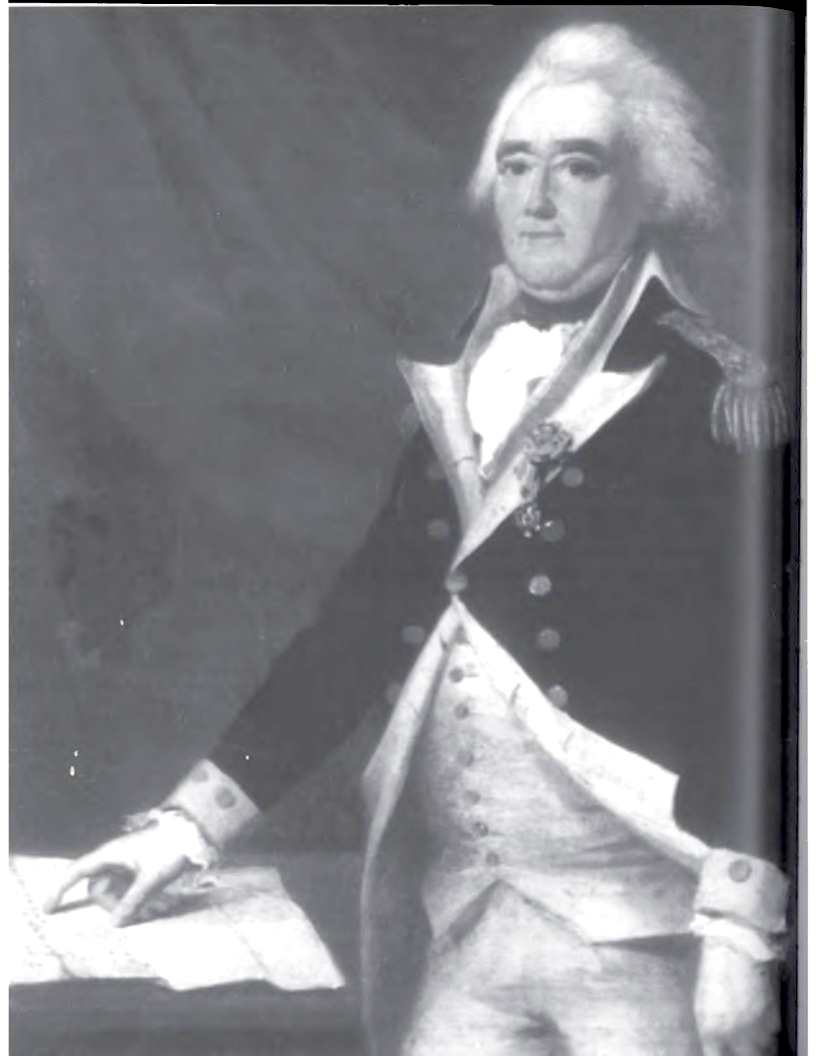
Joseph Bartholomew of Tredyffrin was made a lieutenant and later, Benjamin Bartholomew, a captain in the Continental Army, and John Bartholomew, a major in Mercer’s flying camp in New Jersey. All of this name were of French descent.
The militia company of Easttown had Israel Moore as captain, Christopher Rue as lieutehant, and David Llewellyn, ensign. The muster roll of Tredyffrin included Jonathan Rowland, captain, and Joseph Griffith, lieutenant, so the Welsh were well represented in the militia.
Anthony Wayne was commissioned colonel in September 1775, with Richard Thomas of Whiteland, lieutenant colonel, of the first volunteer regiment raised in Chester County. Thomas was of a Welsh Quaker family.
Colonel Samuel J. Atlee’s musketry battalion was recruited mainly among the Presbyterians of the Great and Pequea Valleys. Caleb Parry, landlord of the Leopard tavern in Easttown, was made lieutenant colonel, Patrick Anderson of Charlestown, senior captain, and Dr. John David of Tredyffrin, surgeon.
During the battle of Long Island in 1776, Parry was shot through the head while endeavoring to rally his men, and Dr. Davis captured. Captain Anderson became so frantic with rage on the death of of a friend that he could scarcely be induced to retreat.
The garrison of almost 3000 men, nearly all Pennsylvanians, was confined in the wretched prison hulks and sugarhouses of New York harbor, where some 1800 prisoners died of disease induced by insanitation, nakedness, and starvation.
Many of those men were of the better class, some from Easttown. When the survivors returned (Lieutenant Phillips of the Black Bear tavern was one of those exchanged), they related their terrible experiences to their friends and neighbors, who became dismayed and dishearteneed. They doubted that the British could be beaten.
Fourth, the failure of the local militia to turn out strongly when the American army marched to oppose the invaders was partly due to local conditions. Between 1765 and the beginning of the war, there had been a large immigration of German-speaking people in the area.
Naturally there were grave doubts of their good behaviour in the presense of the Hessians mercenaries. Potentially there was an experienced military leader in the person of Col. Christian Workizer of near Howell’s tavern. He was one who had repeatedly refused to turn out with the militia because he once held a commission in the British army and retained a sincere regard for General Wolfe, under whom he had served at Quebec. That the German element proved loyal to the soil of their adopted country and became trustworthy citizens is now known to all.
A few miles on either side of an imaginary line drawn through the Leopard to the Bear tavern, thence to the Great Valley Presbyterian meetinghouse and beyond into Charlestown, would have included the homes of most of our Revolutionary leaders who were mostly of Welsh origin.
Some commissioned offices and the ranks were mainly filled by the Scots-Irish of the hills, of whom it has been said that their philosophy recognized resistance as the first law of nature and warfare as the natural state of man. They loved a good fight, had little property to lose, and often made soldiering their trade, as did some of the German-Americans, the very people who the Welsh-Americans suspected of disloyalty.
Therefore, our community was mainly Whig and in the final analysis no one may consistently reproach our countryside with disloyalty to the ideals of America.
On the morning of September 16, 1777, Washington drew up his little army on the South Valley hills in East Whiteland township to give battle once more to the invaders but was prevented from engaging by a storm of unusual violence and duration.
The patriot army then withdrew from the high hills to an eminence in the Great Valley near the White Horse tavern (now Planebrook), where it remained in expectation of an attack until four p.m. It then retreated to Yellow (now Chester) Springs, and continued the next day to Warwick Furnace to replenish the damaged ammunition. It was wet, miserable, and utterly worn out from incessant marching and countermarching.
The Division of Pennsylvania Continentals commanded by Wayne encamped on the farm of Christian Hench, who was an ardent Revolutionist. He supplied their needs as far as it was in his power, even to the slaughter of his herd of cattle.
Meanwhile the enemy rested quietly on the hills overlooking the Valley until the rainstorm was over, contenting themselves with ingloriously robbing the hen roosts, smokehouses, barns and houses of the peaceful farmers, and in burning all the fence rails in the vicinity of their campfires. The fences were chiefly of the stake or worm fence type and in all probability the soldiers made shelters of fence rails and blankets in lieu of tents. On the farm of the Dunwoody’s, General Mathews’ command burned or otherwise destroyed 8500 rails, notwithstanding the abundance of timber. The officers were largely drawn from the upper class, genteel, arrogant, fleshy from good living, and little actual field service. The enlisted men were mostly the riff-raff of Great Britain, Ireland, and Germany.
On the 17th, Lord Cornwallis advanced with the British right wing to the (Old) Lancaster road and on the 18th continued from Malin’s farm past the Warren and Paoli taverns to the Black Bear, where he turned to the left down the Bear road to Howell’s tavern. The main body of troops marched down the Swedesford road into Tredyffrin and encamped between Howell’s tavern (now Howellville) and the Old Welsh Line or Baptist road (now New Centreville). Howe was coiled like a rattlesnake ready to strike, with the most active troops in the rear under the command of Cornwallis, who was the most able general of the British army.
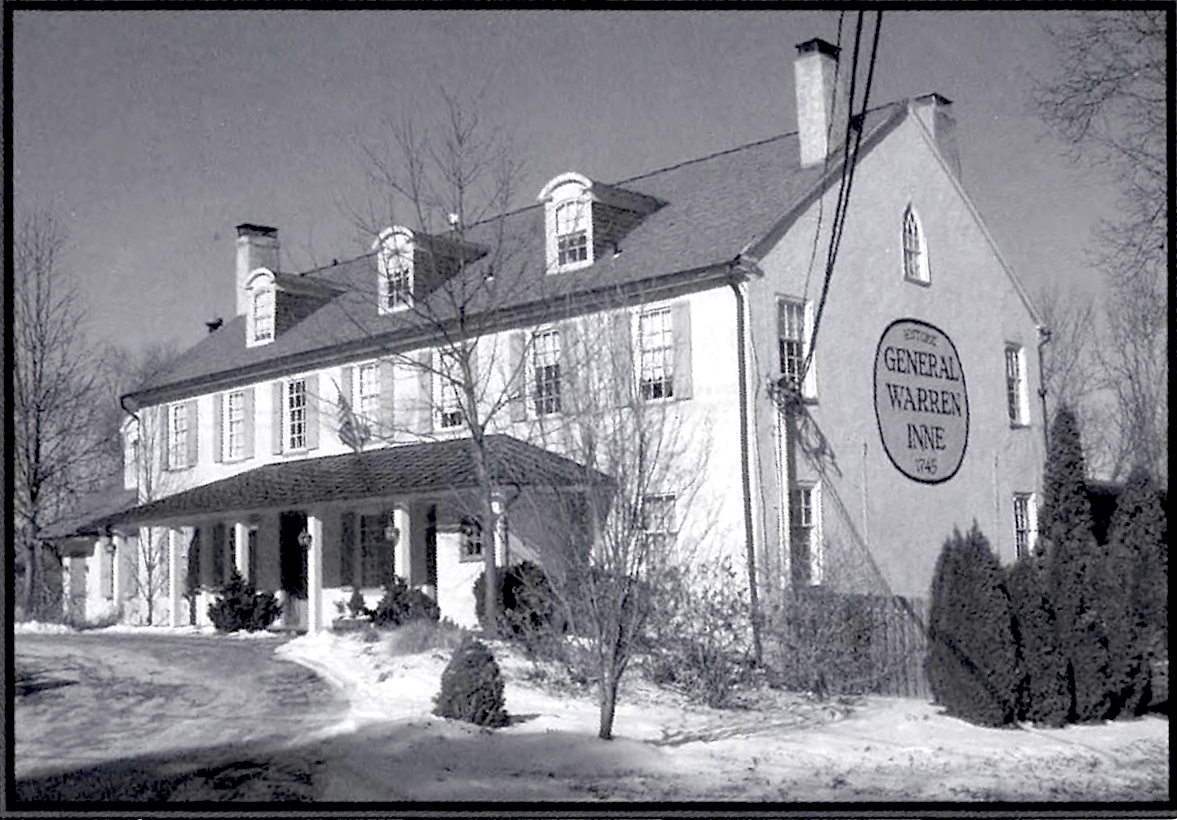
Today’s General Warren Inne, about two miles beyond the western boundary of Easttown, dates from 1745. It is named for Joseph Warren, the patriot general of the revolution, who died at Bunker Hill. However, in early years it was known as the Admiral Warren, taking its name from the British naval hero, Peter Warren. The old inn played a role in the Battle of Paoli in 1777, and after the war the name was changed to honor a participant in the fight for independence.
Let us visualize the parade: horses and dragoons, the tall-hatted and white-belted grenadiers-shining marks for the backwoods-men’s rifles; the fierce, bewhiskered Hessians, the long files of tawdry-clad infantrymen, the lumbering cannon and the long train of wagons drawn by our own Conestoga horses. Its number has been variously estimated, but probably included fewer than 18,000 men, rank and file, though seemingly endless and long to be remembered by our people.
The main body kept to the highway, but the flankers threw down fences and trampled the crops. Like the famous legendary and fabulously huge snake of early Tredyffrin, and immeasurably more dangerous, the hostile army crawled through the beautiful Great Valley. On either side of the well-fenced Swedesford road appeared fields of grain stubble, ripening corn and buckwheat, the dark soil of freshly plowed ground, the lush meadows in which small herds of cattle and flocks of sheep pastured; on past snug well-provisioned farmhouses, barns filled to the rafters with grain and forage, barnyards loud with grunting swine and cackling fowls.
The mud was axle deep in the road but there were sparkling brooks in the foreground, and a marvelous background of forest-clad hills in a mosaic of green, gold, and crimson foliage. Never before had a British army passed through and desolated a fairer or more bounteous region. To the women and children peering from attic windows, the drums seemed to repeat and portend “plunder”.
Following the line of march of the hated enemy came a train of forlorn prisoners closely driven by the Provost Guards under the brutal Major Proctor. In the morning they were drawn up at the road side and there remained until the army had passed and then fell in the rear. In the evening they were marched from rear to near the van, at which time, without the least check from the officers, they endured every kind of abusive and scurrilous remarks.
The British Army encamped from the late afternoon of the 18th to the early morning of the 21st of September, 1777, mainly on the farms of David Howell, Christian Workizer, Valentine Shewalter, Abel Rees, Samuel and James Jones, and Jacob Frick. Nearly all the troops were bivouacked immediately south of the Swedesford road, with the Royal Artillery parked close to the highway near the center of the camp, Brig. Gen. Cleveland in command.
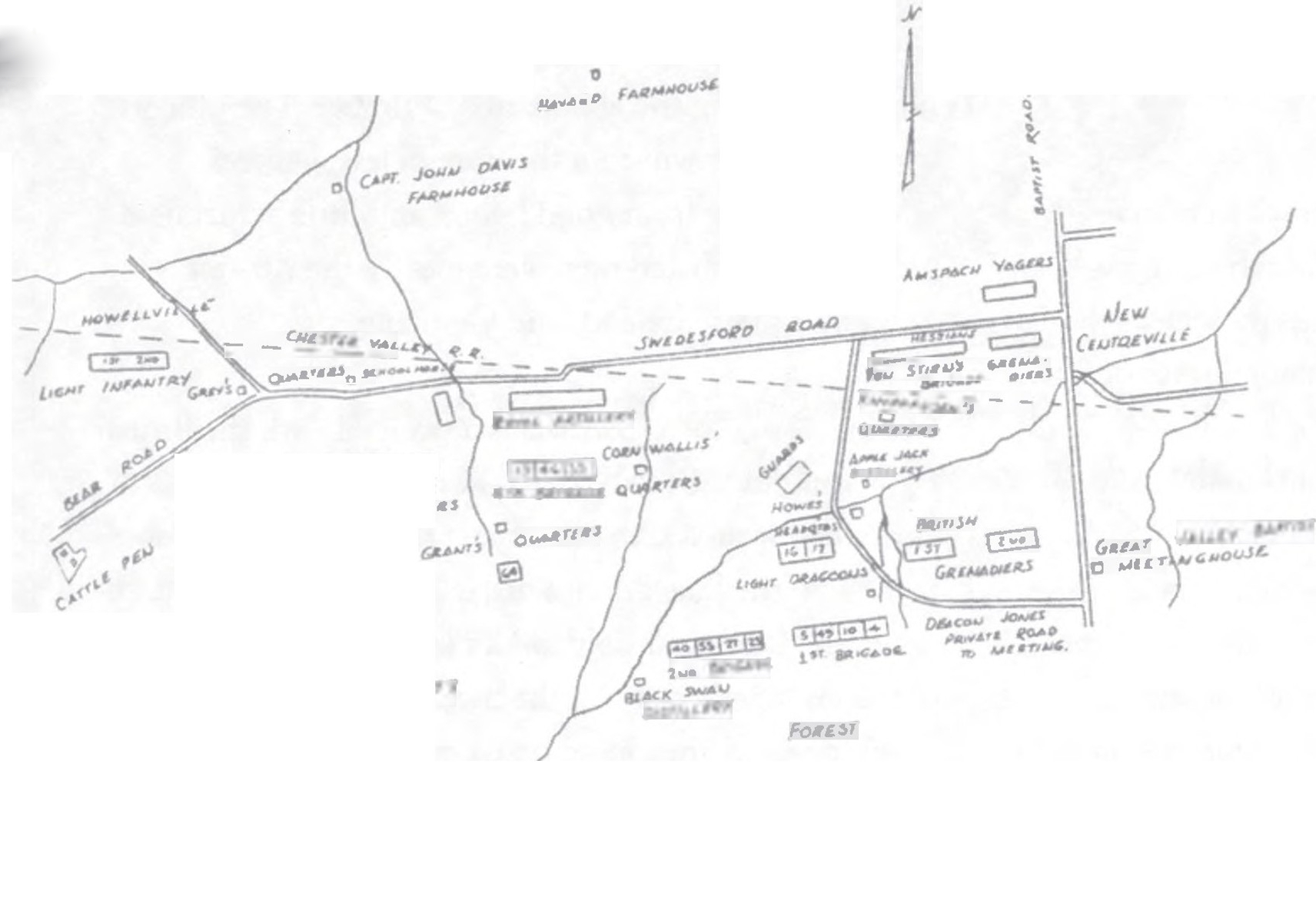
The map shows locations occupied by British and Hessian troops encamped along Swedesford road in the Great Valley from September 18 to 21, 1777 before their march to Philadelphia. Generals’ headquarters, brigade quarters, and regimental positions are indicated in the sketch, stretching from Howellville to the Great Valley Baptist Meetinghouse.
The Foot Guards, under Capt. DeWest, occupied the crest of the detached elevation near the rear of the dwelling of Samuel Jones, which was the headquarters of Sir William Howe, and faced the northern slope of the South Valley hills upon which the First and Second Brigades were situated in the midst of the once great apple orchard and nearest to the present village of Berwyn. Brig. Gen. Mathews’ quarters was probably at the mouth of the ravine, on the west border of the swamp near the excellent spring in the original Griffith John house, later a tenant house on the Jones plantation.
Col. Harcourt and Major Tarleton, with the Light Dragoons, were quartered below the Second Brigade and near the headquarters. Brig. Gen. Sir William Erskine, Col. Monckton and the British Grenadiers occupied the slope and continuation of the great orchard east of the swamp and ravine.
Opposite the British Grenadiers and near the Swedesford road on the farms of Jacob Frick and James Jones were the Hessian Grenadiers under Count Donop. West of them was Col. Von Stirn’s Brigade of Hessians. One regiment, however, under Col. Von Loo, occupied Wilmington.
Knyphausen’s quarters were at the James Jones house. Lt. Gen. Wilhelm Baron lnnhausen and Knyphausen commanded the Hessian troops after the departure of Gen. DeHeister. He remained in America until the close of the war. Bodily infirmity and the loss of an eye caused his retirement in 1782.
The Yagers or Anspach Chasseurs, horse and foot, commanded by Lt. Col. Von Wurmb, were in a field on the Havard land, the northwest corner of the Baptist and Swedesford roads, later the site of the Stone Chimney Picket, and were the only troops encamped north of Swedesford road.
West of the Guards, on advantageous elevations in the Valley, were the Fourth and Third Brigades. Lord Cornwallis had his quarters at Abel Rees’, Major Gen. Grant at Valentine Shewalter’s, Lt. Col. Agnew, Acting Brigadier, quartered at Christian Workizer’s, and Major Gen. Grey at Howell’s tavern.
The Light Infantry commanded by Lord Cathcart and Major Maitland were on Quarry hill near the cedar grove and northwest of the present Bear roadbed.
The encampment covered approximately seven or eight hundred acres, bounded on the south by the forest on the South Valley hills, and on the north side and parallel with the Swedesford road by a thin and almost continuous stand of hardwood, mostly hickory. Branches of the Valley creek and Trout run provided abundant water for the camp.
Horse pickets patrolled the contiguous sections of the Old Lancaster, Baptist, Yellow Springs and Bear roads, but apparently no further. A large cattle pen was built on a branch of the Valley creek as it emerged from Van Leer’s (Prissy’s) hollow. Here cattle and sheep taken from farmers were confined and slaughtered for the army.
The British Army Quartermaster and Commissary Generals Erskine and Wier swept the neighborhood bare of food for men and beast, despite Howe’s proclamation that if the inhabitants remained quietly at home nothing would be disturbed. Cut off from its base and fleet, the Army was compelled to live upon the country, and it lived upon the fat of the land while stuck in the mud of Tredyffrin awaiting the flooded Schuylkill to subside.
Some of the farmers’ boys, in fear of impressment, “skedaddled.” British officers pretended that all the young men of the neighborhood were in the American Army. Nathaniel, a young son of Samuel Jones, drove through the lines to go to the mill and did not return. Attaches of the headquarters amused themselves by repeatedly informing the family: “Well, we caught the young rebel today!”
Hector Mullen, a young Negro belonging to the Jones family, lived to become the patriarch of a numerous tribe and took great pride in his old age recalling the time he held Howe’s war horse in front of the headquarters. It was the proudest event of his life. The General threw him a small English coin which the delighted Negro tossed into the air until he failed to make the catch and the coin rolled under the great stone doorstop, lost to him forever.

Major General Sir William Howe was not yet aged fifty when he led the British invasion of Pennsylvania in the autumn of 1777. Two years earlier while in Boston, he had been named commander in chief of all British forces in North America. He was a clever strategist and able tactician, but he too often failed to follow up successes and had to fight again another day.
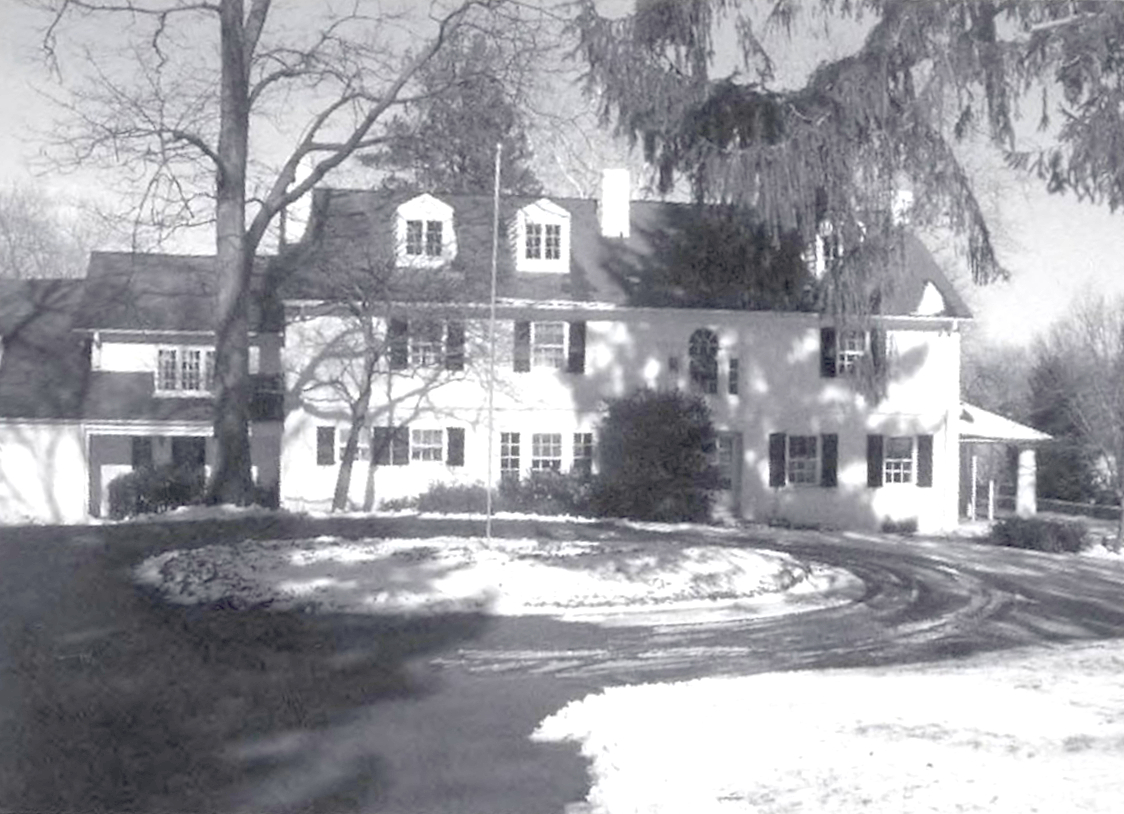
While encamped here during September 1777, British General Howe made his headquarters at the farmhouse of Samuel Jones which stands today on the north side of Old State road just west of Contention lane. The house was significantly altered after fire damage in 1924. Photo by Marc J. Heppe.
Although Howe’s personal desire may have been that of conciliation, his army behaved as if in a conquered country, sweeping the land bare of provisions, forage, and stock, leaving the inhabitants in many instances absolutely destitute.
There are many almost forgotten traditions of their depredations. A party of Hessians visited the Jacob Bach (now Baugh) farm and were in the midst of looting and wanton destruction when John, the young son of the owner, voiced his disapproval. A soldier pricked him with a bayonet and kicked him through the kitchen doorway. John’s mother was frying doughnuts and was ordered to keep on with her occupation, but she became so enraged that she hit the man over the head with the frying pan filled with hot grease.
At the first alarm the two black workers were ordered to drive the geese into the woods; they obeyed and then took “leg bail” themselves. The marauders robbed the farm of everything they could haul away, even digging up the potatoes. The beds were ripped open in search for money and the goose feathers cast to the wind, and as an additional annoyance the window panes were poked out. Glass being then unobtainable, the windows had to be boarded up until spring and the family would have fared badly but for the kindness of neighbors. Two deserters were shot and buried under a tree near the quarry on this farm.
It has been said that the Hessian hirelings had been promised the lands and chattels of the Rebels whom they were to dispossess. Many were eager for plunder and made no distinction between Whig and Tory.
Until recently there had been a large jagged hole in the stair door and several lead slugs in a stair riser of the house formerly occupied by Benjamin Jones, but now a tenant house on the Brookmead Farm. There is a tradition to the effect that a Hessian thought he saw a Rebel soldier in the kitchen and fired a shot through the window.
The Hessians would sneak out of camp without their muskets and visit the nearby Quaker farmhouses in search of plunder. A typical instance is that of a small party at Rehobeth Farm. They first drank all the milk and cream in the springhouse and without pausing to wipe the cream from their beards continued to the house in search of something to eat or to carry away. The Walkers called them “unwelcome visitors.”
A large detail of British approached the Stephens home and halted while the officer in charge inquired the location of the farmhouse of Thomas Waters (who was the father-in-law of Col. Dewees toward whom they seem to nurse a particular grudge). Sarah Stephens once more proved disloyal to a neighbor and fellow country-man, for she pointed to the next farm which they proceeded to loot of over 173 pounds worth of personal property including a substantail amount of cash in gold, silver, and paper.
The Waters were perculiarly unfortunate. A bag containing 55 pounds of gold and silver had been hastily thrown under an out-building where it would have been safe had not a soldier chased and cornered a particular fussy old hen under the same structure. Of course, he found and seized the bag for his own good fortune. They also took a servant who had thirteen months to serve, to the value of fourteen pounds.
It is a pleasure to record a single act of courtesy. Some Hessians had halted the wife of Whitehead Wetherby as she was riding out ostensibly to the grist mill with a bag of wheat, but actually to carry provisions to her husband who was watching the British camp from a vantage point in the South Valley hills near Cockletown. The Hessians were about to rob her of her jewelry when a gentlemanly British officer rode up to her rescue and conducted her safely home to Grove Hall in Easttown.
Valley Forge appeared as a notch in the North Valley Hills plainly visible from the British camp and less than three miles distant, yet unvisited by the military until the day before their departure from Tredyffrin. There was then no road through the length of the gap.
William Dewees jr. was the well-to-do iron master who the Quakers accused of being aristocratic. He had been a colonel in the militia but was attached to the quartermaster’s department during the Pennsylvania campaign, and when that department began the delivery of army supplies at his place, he entered protest that it was directly in the path of the enemy and if discovered by them it would cause his ruin. Nevertheless, as wagon after wagon arrived, his mill and storehouses became stocked with military stores.
On September 18, a British spy discovered, as he reported to Howe, upward of 3800 barrels of flour, soap, and candles, 25 barrels of horseshoes, several thousands of hatchets, kettles, and entrenching tools, and 20 hogsheads of resin, in a barn at Valley Forge; but it was not until the 20th that the Guards and Light Infantry were ordered forward with some Dragoons to destroy the magazine. As they approached at five a.m. they were fired upon by the sentinels and an officer of the Guards was slightly wounded. They took the whole. This is Captain Montressor’s story which differs from that of the Americans. Montressor was Chief Engineer of the British Army.
Colonel Dewees with some help had labored all the night before in the removal of the stores by wagons and rafts to a place of safety. Washington, who was then in the vicinity of the Trappe, had sent his youthful aide-de-camp, Colonel Alexander Hamilton, attended by Capt. Harry Lee and six dragoons, with orders to destroy that which could not be removed.
Hamilton had provided a flat-bottomed boat at the river’s edge and warned of the approach of the enemy, he instantly ordered the remaining four members of his little party aboard. Lee, preceded by his two videttes, made a quick decision to regain the bridge and escape up Nutt road by the speed and soundness of his steed.
Since the stores were almost all removed, there was nothing the British could do in their rage but apply the torch to the saw mill, dwellings, store, charcoal, and iron storage houses and the forge, to the ruin of the proprietor, as he had anticipated.
Owing to Montressor’s entry in his journal as of the 23rd when they fired Valley Forge, there has been some doubt among later historians of the exact date of the destruction of the forge. Historian Henry Woodman could not give the exact date but asserted that it occurred a short time previous to the massacre at Paoli. However, Colonel North, who was secretly observing the British camp from Mt. Joy, noted the conflagration on the 20th, and later, with William Jackson and George A. Baker, signed as witness. Captains John Davis and Benjamin Bartholomew estimated the damages sometime after the war, and in 1809, seven years after Dewees’ death, $7500 was allowed his widow.
Enroute to Warwick, Washington detached Wayne to threaten the enemy’s right flank as soon as he broke camp in Tredyffrin and attempted to cross over the fords of the Schuylkill. Smallwood with his division of Maryland troops, variously estimated at from 1850 to 2600 men, coming up in the rear of the British army, was to reinforce Wayne as soon as it became prudent to attack, and he was to also act in conjunction with Maxwell’s Light Infantry and Potter’s Pennsylvania Militia ordered to the enemy’s left flank , if it could be accomplished without too much loss of time.
Wayne’s Division moved from Yellow Springs in the early morning of the 17th September to above Paoli and on the 18th selected a camp site on the Ezekiel Bowen farm, later occupied by Griffith, south of the present town of Malvern, on the plateau a short distance west of the continuation of the Longford road leading up from the Warren tavern and about two miles above the Paoli inn.
As the division had lost most of its baggage at Chadds Ford, the camp was largely of huts of fence-rails and brush. Here Wayne was in a position for a quick attack and he believed his presence was unknown to the enemy four miles away.
Acting Division Commander, Brigadier General Wayne’s command based on the known fact that some of his regiments had been reduced to almost company strength, consisted of about 1350 Pennsylvania Line troops, together with a company and four pieces of Field Artillery and two troops of Bland’s Dragoons, commanded by Lt. Col. Temple of Virginia, making a division of actual, not paper strength, of barely 1500 men fit for duty.
Col. Caleb North was posted on the summit of Mount Joy, Valley Forge, and Whitehead Wetherby, a patriotic citizen of Easttown, on the South Valley hills, to make observations of the British camp. In the early hours of the morning of the 19th, word was passed back that the foe was beating reveille and the Division marched by its left flank to White Horse, but as the enemy did not move, the troops returned to camp before dawn. Wayne, however, had secured reliable information of the enemy’s intention to take up his line of march for the Schuylkill at two a.m. on the 21st, so he sent Col. Chambers on the 20th to conduct Smallwood’s Division to the Paoli camp preparatory to an attack, while he, with Cols. Hartley and Temple, recommended the road leading to the enemy’s left flank, and as the night approached and it was raining, ordered his men to lie upon their arms and protect their cartridges with their coats.
Eager to be off as soon as the Marylanders arrived, he next ordered his horse led out in front of his quarters at the Hutchinson, later King farmhouse, saddled and holstered, with his cloak thrown over the saddle to keep it dry. With a flooded river on the enemy’s front, Wayne wrote Washington “We only want you in their rear to complete Mr. Howe’s business.”
The British Commander was not nearly as supine as Wayne thought. He refused to move until a dangerous foe was driven from his rear and had spies and scouts abroad who secured not only exact information of the identity and number of troops, the approximate position of their camp and the roads leading thereto, but even their countersign and of Wayne’s intention to attack at an early hour of the morning, and Howe’s intelligence appeared common knowedge in the Light Infantry camp.
Between nine and ten o’clock of the evening of the 20th, a patriotic Welsh gentleman, Thomas Jones, a retired farmer of Easttown, came to Wayne with the information that a bound boy, a servant of William Clayton, landlord of the Black Bear tavern, had wandered down the Bear road in search of a cow and had been detained in the British camp for a short time, where he heard some Light Infantrymen speak of an attack to be made that night upon Wayne’s camp, Col. Hartley, Brodhead, and Temple were present during the interview.
Wayne instantly ordered out additional horse pickets to patrol all roads leading to the British camp and planted two new pickets, making six in all, exclusive of the horse picket under Captain Stoddard, well advanced on the Swedesford Road. Brigade Major Nichols, going the rounds, missed a sentinel, but a light horseman dispatched to the spot returned to report that the man was on duty and all was well. Wayne testily advised Nichols to go to bed.
The enemy detachment was already assembled on the Swedesford Road in the vicinity of the Davis Schoolhouse and Howell’s tavern, commanded by Major General Grey, the same cold-blodded officer who later superintended the surprise and slaughter of Baylor’s regiment near Old Tappen, New York, and who was finally rewarded with the title of Earl.
His force consisted of the 2nd Battalion of Light Infantry composed of the best drilled and most active companies from six regiments, the 42nd and 44th Regiments, and some Light Dragoons. The 42nd or “Black Watch” was the famous Scots Highland Regiment, and the whole command seemed well fitted for the desperate enterprise. Grey, sensible of the difficulty in distinguishing friend from foe on a night expedition, ordered the charges drawn or the flints removed from all muskets and the attack to be made with bayonets and swords only.
From the 2nd Brigade there came the 40th and 55th Regiments under Lt. Col. Musgrave, as a reserve. They filed off over the fields to the left at eleven p.m., gained the (Old) Lancaster road at the Bear tavern by way of the Bear road, and took position across the road and fields at the Paoli tavern. They were not engaged. A detail searched the Wayne homestead for the General and even thrust bayonets through a large boxwood bush at the corner of the house, hoping to find him, but otherwise behaved with politeness to Mrs. Wayne, though they carried off her two men servants.
Grey’s column advanced on the Swedesford road at ten p.m., preceded by an advanced guard of four Dragoons, a company of Light Infantry, a company of Riflemen armed with swords, and one or two troops of Light Dragoons, whose duty was to dispatch all sentinels.
At or near Bull’s Corner, the advance was challenged two or three times and fired upon by one of Stoddard’s videttes, who then put spurs to his horse and escaped. The column turned south on the Longford Road (at Valley Store) where the first sentinel challenged, fired and escaped, and another likewise near Warren tavern. Tradition states that the British made use of the American watchword but the sentinel discovered they were not Americans and fired.
Every adult male inhabitant along the route was hustled out of bed and taken along to prevent an alarm being given. It is related that a corporal’s guard entered the home of Captain Bartholomew on Swedesford road and took an aged uncle clad only in his night shirt. Tradition holds that he died shortly afterward from the exposure and rough treatment received at their hands.
Peter Mather, landlord of the Admiral Warren, was pulled from his bed and, unclad as he was, forced downstairs and out to a row of tall poplar trees in front of the tavern, where there was a crowd of civil prisoners coupled together like malefactors and under guard. Mather was bound to Squire Barthomomew, a man of almost eighty years. Mrs. Mather forced her way to her husband and helped him on with his buckskin breeches.
Here a party was sent to fetch the blacksmith, whom they forced to guide them to the picket a few hundred yards up the road. Two sentinels were dispatched by the riflemen’s swords after they had challenged and fired. Lt. Samuel Brady of the 6th Regiment was on guard and lying down with his blanket buckled around him. The British advance was nearly on the picket before the sentinel fired. As Brady jumped a fence, an infantryman struck at him with his musket and pinned his blanket to a rail; the officer of the picket tore loose and ran. A dragoon overtook him and ordered him to halt. He wheeled and shot the horseman dead, then escaped to a small swamp in which he hid until morning.
The expeditionary force, steered by the straggling fire of such of the retreating pickets who had escaped their bayonets and swords, reached the summit of the hill and saw at their right the line of huts by the dim light of the dying campfires and the glimmer of a few stars. General Grey then rode to the head of the column and commanded, “Dash on, Light Infantry!” Without another word, the whole battalion dashed into the woods and gave such a cheer that made the wood echo.
Many of the Americans were taken completely by surprise. Some with arms, others without, ran barefooted in all directions. The Light Infantry bayoneted every man they came up with, while the Dragoons raged, sabers in hand. The 44th Regiment followed to bayonet all who had escaped the first line, and the 42nd Regiment followed in close rank.
Even some of the British officers were horror-stricken at the havoc. “The shrieks, groans, shouting, imprecations, deprecations, the clashing of swords and bayonets, no firing from us, little from them, except now and then scattered shots, was more expressive of horror than all the thunder of artillery,” so wrote a British officer.
The enemy gained the plateau about midnight, hence the slaughter was consummated in the early morning of the 21st. Howe stated in his report “about one o’clock.” The attack was made in the most fiendish manner, the enemy shouting “No quarter to the Rebels!” and in derision the American watchword: "Here we are and there they go!" Many were awakened by the cry, “Up, men, the British are on you!” and could offer no defense while they endeavored to form, and in consequence were routed from the field. Grey followed the disorganized Americans who had fled out of all possible support, but soon satisfied with the damage inflicted, sounded the recall and returned to the camp in Tredyffrin with eight captured baggage wagons, many arms, and a reported loss of Captain Wolfe and three men killed and four men wounded.
Exclusive of the two regiments in reserve at the Paoli inn, the British probably numbered about 2000 men, while at no time were there over 200 Americans in active opposition to them. The total American loss cannot be definitely known. It has been placed at from 150 to 300 men, with a probability that the former is more nearly correct.
Historian Charles Stille gives the loss in slain as 61 men. There are eight Revolutionary soldiers buried along the wall south of the gate to St. Peter’s church cemetery some of whom tradition indicates as the pickets slain near the Warren tavern, 53 mangled dead were found upon the field and interred in a double row in a trench 12 by 60 feet by the yeomen of the neighborhood. Another body found two weeks later in the woods was buried where it lay.
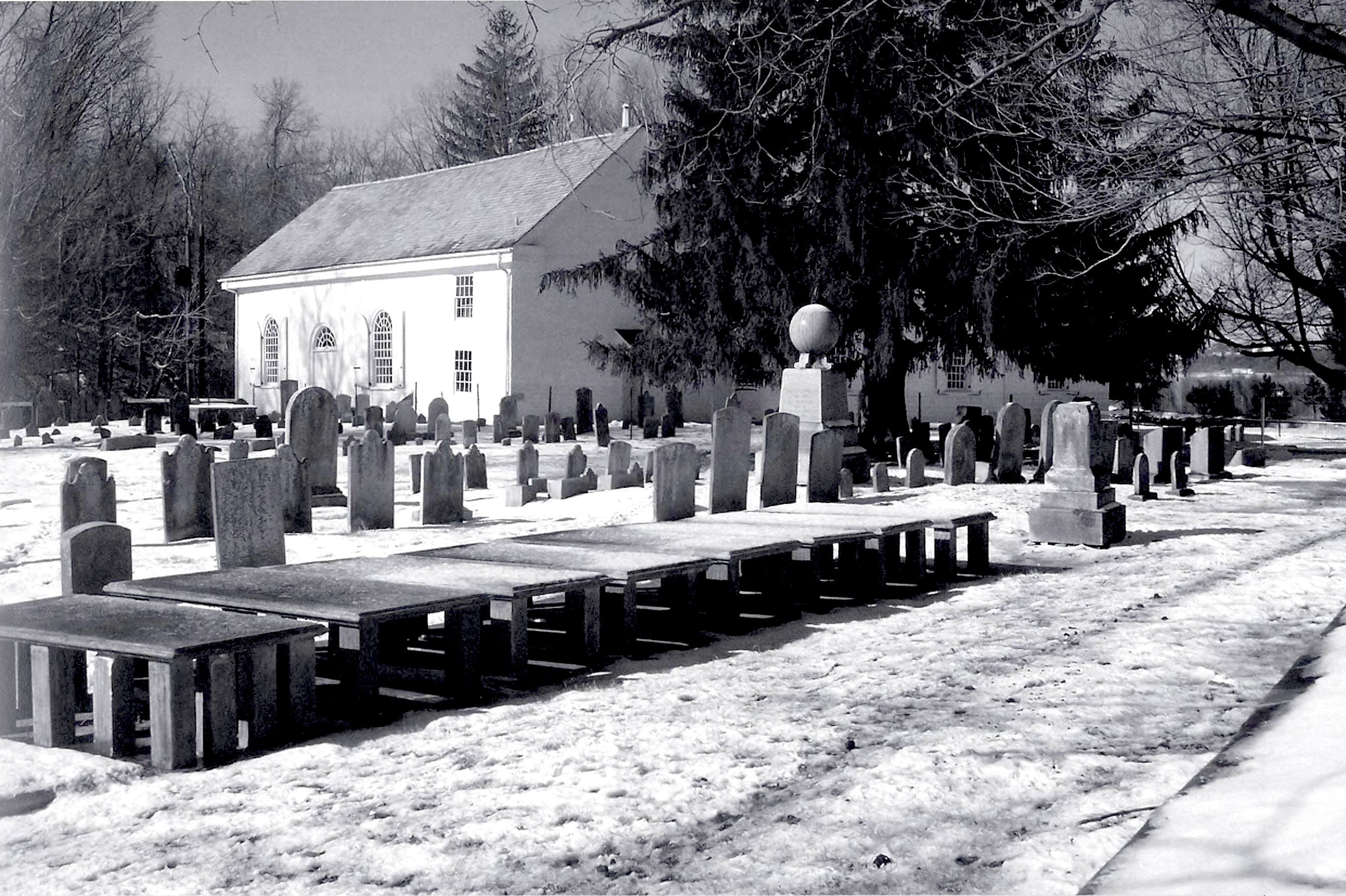
The churchyard at St. Peter’s Church in the Great Valley, according to local tradition, was the place of burial for certain Continental soldiers after the battle of Paoli. Some go as far as to to speculate that British dead, including perhaps Captain Wolfe, were buried there. The place presents a peaceful pastoral scene today. Photo by Marc J. Heppe.
The poor, mutilated bodies were wound in their blankets, with squares of linen cloth over their faces. The linen weaver, James Neilley of Old Cockletown (now Berwyn) claimed to have furnished the sheets from which his wife cut the squares for that purpose.
The local people have always referred to this as the Paoli massacre and how nearly correct they are may be told in the report of Howe and the journals of his officers. Of the 71 prisoners carried off, 40 were so badly wounded that they had to be left at different houses along the road.
In the early hours of Sunday, September 21, immediately after the return of the detachments from Paoli where Howe trumped Washington’s ace with Grey, the British army in Tredyffrin broke camp and took up their line of march directly for the Schuylkill. An observation party had found the Swede’s ford strongly guarded on the opposite bank with cannon behind breastworks. Here was General Armstrong with the Pennsylvania militia.
Picked corps from the British army could and often did move with rapidity, but the ponderous army as a whole seldom averaged above five miles in a day. The forward movement began at five a.m. by way of the Baptist and Gulph roads to Valley Forge and out Nutt road. The evening’s camp extended along that road from Fatland ford to Fountain inn (Nutt road and Bridge street, Phoenixville, the direct road to Gordon’s ford) The site today is marked with a boulder as the farthest inland point reached by the British invasion of the Northern Colonies during the Revolution.
Howe’s move up the river was interpreted as a threat to gain Washington’s right, prevent the juncture of Wayne’s and Smallwood’s divisions with the Continental Army, and to destroy the military magazines at Reading; so, on the 22nd, Washington moved westward on the Reading Road as far as Limerick and then bore right on the Swamp road and encamped in the vicinity of Falconer’s Swamp southeast of Fagleysville.
British couriers reported that Washington had retreated toward Reading, so on the 22nd at five p.m. the Hessian Grenadiers passed over Gordon’s ford, under cover of artillery and small arms fire, and returned again to deceive chance observers, and at the same time the British Light Infantry and Grenadiers passed over Fatland ford and took position on the eastern side.
On the 23rd just after midnight, the whole army moved over and by ten a.m. the last had passed over with the heavy baggage without opposition. At Gordon’s ford the Dragoons were in advance, followed by the Hessians who began to chant their German hymns as the water reached their knees. Cornwallis accompanied this column and Howe at Fatland ford. American scouts shot and killed two British officers at the upper ford, but there appeared no serious opposition.
Howe with the right wing united with Cornwallis at Bean’s tavern via Ridge and Swedesford roads, and on the 26th entered Philadelphia, the goal of forty days on the high seas and thirty-two more days on land, having marched, as one of their generals recorded, a hundred miles cheerfully and successfully, subsisting on the country and with nothing to drink for many days but water. If they had not dependable guides as volunteers, British gold or the prick of the bayonet secured all necessary information.
The damage sustained by the peaceful inhabitants of our neighborhood through the emissaries of “His Most Graceous Majesty King George the Third” that “fusty old drone from the German hive,” in less than three days occupation, is almost beyond belief, since they wanted everything except arms and ammunition.
One farmer bitterly characterized Howe as a falsifier of his word and a plunderer of private property. Another wrote, “Not even a spoon left to eat my victuals nor a comb to comb my head.”
There is a long list of damages for the loss of stock, grain, forage, provisions, wagons, harness, saddles, tools, household furniture, metal and earthenware, linen blankets, personal apparel, objects in gold and silver, but not a single firearm, and only one silver-hilted small sword, that of Surgeon Davis. One Negro slave valued at 130 pounds was stolen from Samuel Havard.
Samuel Jones (Howe’s headquarters) lost all of his crops and livestock except one horse which they were unable to catch. Abel Rees (Cornwallis’ quarters) lost everything including the two ends of his barn and his apple orchard, and Christian Workizer (Agnew’s quarters) likewise, including thirty apple and peach trees destroyed.
Since none of the Quaker families and few of the Mennonites made returns, and others neglected to do so, it is difficult to estimate the total loss. Possibly the listed damages represents fifty per cent of the neighborhood cost of entertainment and that the total damage reached $50,000, a large sum for those days.
If there remains any question whether our community remained undecided, pro-Whig or pro-Tory, we might take into consideration the contrast in the treatment of the inhabitants by the haughty invader and by the paternal American Commander. Howe left a path of desolation, while Washington was always considerate of the right of the farmer.
Less than three months later, on December 19, 1777, with the British firmly in control of the capital city of Philadelphia, General Washington led his troops from their positions on the hills at Whitemarsh into winter quarters at Valley Forge. There the soldiers built log huts for shelter and the officers quartered in stout stone farmhouses of the early Welsh settlers.
As winter settled in, encounters between Continental and British troops were largely minor actions west of the Schuylkill involving American militia and British provincials. The achievements of Potter’s Pennsylvania militia, Morgan’s riflemen, and of other heroic outposts, may never be told, but the traditional stories handed down to us, and history itself, prove that they strove valiantly and well to confine the enemy within the narrow limits of the fallen metropolis. Franklin was right, “Philadelphia had taken Howe.”
Had the outcome of Whitemarsh been less fortunate, the encampment of the Continental Army during the winter of 1777-1778 would not have been at Valley Forge, but in all probability, deep in the rugged hills some where between Lancaster and Reading, leaving open to depredation of the enemy much of the rich agricultural and industrial region of Pennsylvania. The selection of Valley Forge constrained Howe to sporadic incursions in a greatly restricted area.
Let not the reader be deluded by a mental picture of a camp of wretched humans shivering in idleness around open and smoky camp fires. The winter was of average mildness, the huts snug and warm, and from first to last the camp was one of intense and constant activity. It is related that Captain John Davis of Wayne’s brigade, whose home was within the picket line, had leisure to visit his house on only one or two occasions during the encampment. These men toiled for a cause they believed just. What men of courage, fortitude and endurance could do, was done.

Easttown’s own General “Mad Anthony” Wayne was quartered at the home of Joseph Walker on the corner of his farm not far from today’s Gateway Shopping Center. Nicknames usually begin at home; Wayne’s originated with his own men. The circumstances have been variously related but differ only in minor points.
A subordinate in a state of intoxication reported to Wayne and received a blistering reprimand. “He was a mad Anthony,” said the sobered and chastened man on his return to his quarters, to the delight of his cronies who were acquainted with the caustic temper of their General, and as soldiers have to laugh, the remark quickly spread through the Pennsylvania ranks and soon the whole army. “Mad” in the local vernacular means “angry,” but it assumed an entirely different meaning with the troops of other Colonies, of which “rash” is the mildest and “crazy” the harshest definition.
Beyond the line of pickets of the main camp there were outposts with a more or less complete system of communication with Valley Forge. One of these connected Signal Hill at the crossing of Sugartown and Newtown roads, half a mile or so south of old Cockletown (now Berwyn). This outpost was commanded by Captain Henry “Light Horse Harry” Lee who had a line of signal trees from his quarters to Mt. Joy, Valley Forge. They were large chestnut trees with their tops lopped off to permit the erection of rude scaffolds for the observers to signal to camp the detection of an approach of the enemy or of a farmer hauling supplies to the City market.
An observatory of this nature stood in the middle of Cassatt avenue, half way between Conestoga road and the Turnpike, Berwyn, until removed to grade that avenue. Another stood in the clearing of the Burn farm, nearly on the rear line of the present Bair estate (Hillcrest). A third stood on a private cartroad which may easily be traced along the Burn and Reese woodlots and on down into the valley to the Samuel Jones (Griffith John) plantation.
There was probably another tree along Waterloo avenue bordering the Coates estate, and, of course, there was the one on the crest of Signal Hill. The exact method of communication employed is unknown but it is thought that the report of gunfire brought one after the other horse picket to his observation post where messages were conveyed by means of flags, mirrors, or torches.
On the highest point along the Newtown Street road, in front of the David Thomas house, now the Aronimink Golf Club grounds, there was a sentinel or signal tree, an oak, now gone. This tree top commanded a view to the City on a clear day, and, it linked with two others on the north with Signal Hill. By the aid of those observation posts, the vigilance of Lee and his troopers intercepted a large part of the supplies intended for the City market. The drovers usually received a stated number of lashes upon their bare backs and their produce was confiscated.
The late William Wayne jr. had a letter from General Wayne to his wife which throws some light upon the prevailing habit of all classes to evade the embargo on provisions. Probably through Captain Lee, General Wayne had received unofficial word that his thrifty wife had been detected in her attempt to run the blockade. In his note to her the General wrote, in substance, “Though British gold seems more desirable than Continental notes, the American army is striving hard to keep supplies from the enemy and your actions, if repeated, may compromise my honor as a Continental officer.”
Since the British were in great need of country produce, and as Lee had been particularly active in stopping the supply from this quarter, a scheme was formed in January, 1778, to surprise and capture him in his quarters at the stone house owned by James Scott, later the estate of Dr. Stout (now the daycare center, A Child’s Place). The same buildings were also used as a storehouse until the goods could be transported to the camp.
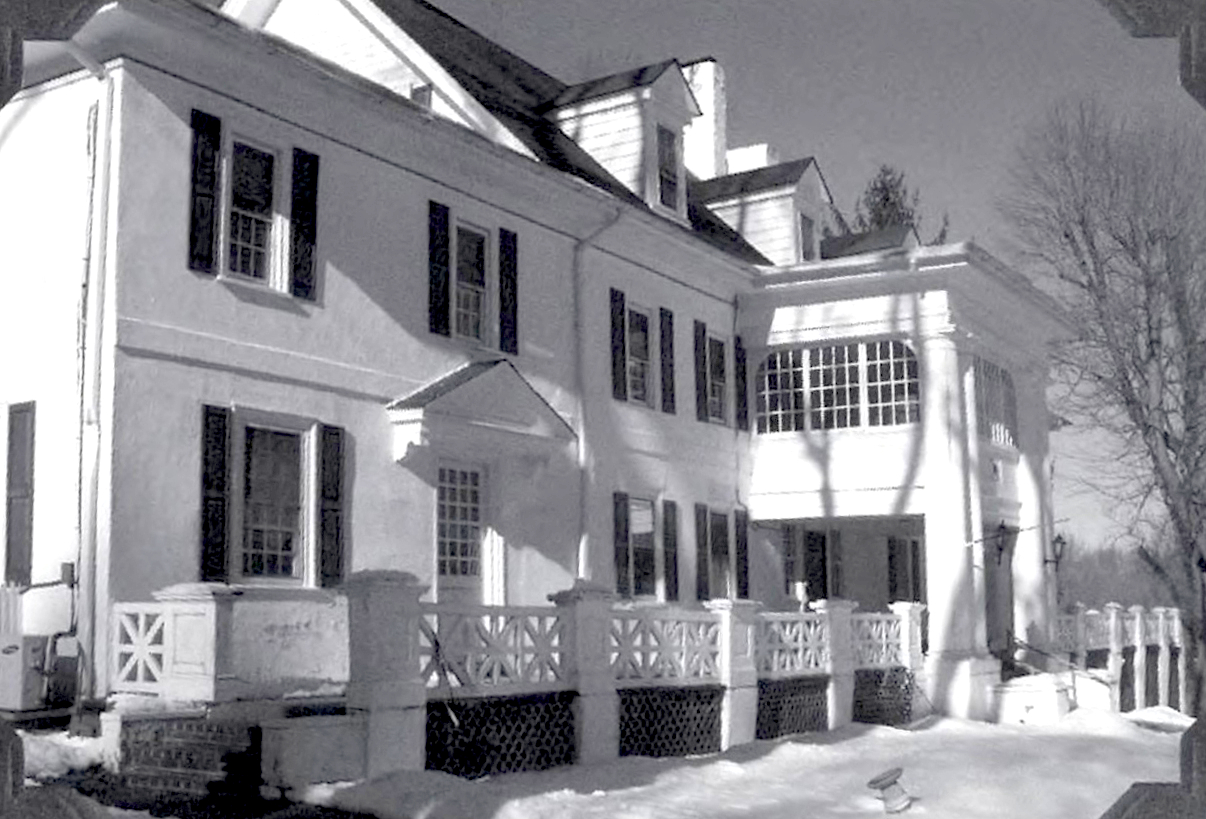
The farmhouse of James Scott used as a place of garrison by Captain “Lighthorse” Harry Lee and his detachment at Signal Hill survives today as part of the day care center, “A Child’s Place,” along Sugartown road near Waterloo avenue. Photo by Marc J. Heppe.
A force of about 200 dragoons, led, it is said, by the notorious Lt. Col. Banastre Tarleton, made an extensive circuit on the night of 17 January probably by way of Gray’s ferry, Darby, and Newtown roads. They seized four patrolmen without giving an alarm and arrived at dawn in a most daring raid. According to tradition in the Tryon Lewis family, one of the women in the farmhouse along the Darby Creek road observed the long line of horsemen as they passed, but being a Quakeress and in fear of bloodshed, she did not awaken the men.
Lee’s force, at his quarters, was insignificant, five men and four officers including Major Jameson who commanded two troops on the eastern side of the river and here present on a visit. One of the men saw the British coming and Lee had a moment’s warning. The quartermaster sergeant attempted to save some of his stores, was severely sabred, and made prisoner.
The British dragoons immediately surrounded the house, sounded a parley, and demanded instant surrender or the house and its defenders would be burnt. Lee’s reply was, “Who but a fool ever threatened to burn a stone house?” Meanwhile the patriotic owner, who, at the first alarm, had succeeded in evading the enemy, carried word to a detachment quartered in the Great Valley and Colonel Stevens was dispatched with a battalion of infantry to the rescue.
The doors were immediately barred and though there were not enough men to guard all the windows, Lee placed his men so effectually that he repulsed an assault. One of the bravest was Ferdinand O’Neil and but for the flashing of his carbine, Tarleton would have fallen in his attempt to enter a window. However, he glanced up with the utmost coolness and exclaimed, “You have missed, my lad, for this time.” There was little protection in the yard, so the dragoons fell back, though their shots spattered the walls and woodwork of the house. Obviously the surprise had failed, so after half an hour’s indecision they turned toward the stable to drive out Lee’s horses, but drawn to the west windows, Lee’ s men delivered a volley while the Captain shouted, “Fire away, boys, here comes our infantry, we’ll have them all,” and Lieutenant Lindsay, with the blood dripping from his wounded hand, rushed upstairs, opened a north window and eagerly beckoned, as if reinforcements were close at hand.
The ruse was successful, the enemy spurred quickly in the direction whence they came, having accomplished nothing commensurate with the boldness of the enterprise. They vented their rage upon unprotected farmhouses in their retreat by way of Newtown and Darby. Records of various claims are on file, among others that of David Thomas (Wyola), “To clothing and other articles taken out of my house by light horsemen on their return from an attack upon Captain Lee in Easttown - 5 pounds, 3 shillings, 2 pence.”
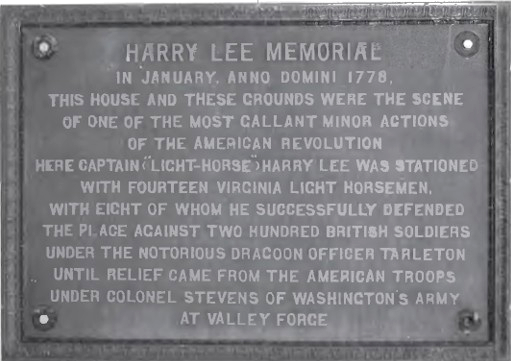
On 20 January, Washington, in his general orders, gave thanks to Lee for his gallant conduct, and later, recommended him and his officers to Congress as having uniformly distinguished themselves by conduct of exemplary zeal, prudence, and bravery. Congress, to reward their merit, resolved that Captain Lee be promoted to the rank of Major and empowered to augment his corps by two troops of horse. He later became a Major General and the father of the great Confederate General Robert E. Lee.
One of the most famous, and in the eyes of the British army, infamous, residents of Easttown, second only to Anthony Wayne, was the Rev. David Jones. He came to the Baptist Church in the Great Valley as pastor in April, 1775, even as the first shots of the Revolutionary War were fired in anger outside Boston. He had most recently served as a missionary among the Indians of Ohio during 1772 and 1773 and had a reputation as a supporter of the cause of independence.
Within a year, he offered his services to the Pennsylvania Assembly and was appointed a chaplain to the Fourth Pennsylvania battalion. His unit was ordered to Fort Ticonderoga to support the armies of Gates and St. Clair. The next year he became chaplain to General Wayne’s brigade and was present at Brandywine, Paoli, and Germantown during the Pennsylvania campaign. Later, he ministered to Wayne’s troops when they joined the southern army at Yorktown and followed Wayne to Savannah for the closing days of the war.
Rev. David Jones returned home at the end of 1782 to take up farming and preaching. While on leave from the army in 1781, and at the suggestion of General Wayne, Jones traded his property in the Great Valley for a parcel of land on Leopard road near Waynesborough. He was content to build his farm and supply the pulpits of many churches for the next two years. In 1786, he leased the farm, withdrew from the Valley church, and became pastor of Southampton Baptist Church (Bucks county), but in 1792 returned to Easttown, finally agreeing to again serve the Great Valley church “... until a more favorable situation presents itself.” No such favorable situation arose during the next twenty-eight years.
Indian wars were vexing the new United States of America. President Washington appointed Anthony Wayne Commander-in-Chief of the U.S. Army, with the rank of Major General. He was about to undertake that which Generals Harmer and St. Clair failed to accomplish after a fearful loss, the defeat and subjugation of the Indians north of the Ohio river. Wayne, in turn, appointed Rev. David Jones chaplain of the army. His commission was dated May 13, 1794, and as he had traversed this region on missionary work some years before, he proved valuable as a guide to the expeditionary force, which administered a crushing defeat to the Indians at Fallen Timbers on August 20 of the same year.
Wayne negotiated the Treaty of Greenville with the Indians in 1795 and returned to a hero’s welcome. Within four months, however, President Washington asked Wayne to travel west again. Under the terms of Jay’s Treaty, the British were to surrender the Northwest forts, and Wayne was to receive them for the United States. The mission accomplished, Wayne retraced his steps toward home but was stricken and died at the U.S. Fort Presque Isle, today’s Erie, Pennsylvania, on December 15, 1796, just sixteen days before his fifty-second birthday.
At The Same Time
British troops under Cornwallis surrender and Yorktown
First successful hot-air balloon flight
French Revolution; France declared a republic
Corsican Napoleon Bonaparte leads French army, conquers most of Italy