The Lincoln Institution was a charity created by Mary McHenry Cox which operated from 1866 to 1922. It had 4 phases:
1. A Civil War orphanage funded by the State of Pennsylvania.
2. An Indian School funded by the Department of Indian Affairs of the Federal Government.
3. A privately funded Indian school.
4. A privately funded orphanage for white Protestant boys.
Click on one of the gray buttons below to show details:
Mary McHenry was born in 1827. She received a substantial inheritance through railroad investments. In 1856 she founded the Church Home for orphan boys and helped children living on the streets of Philadelphia from her home. In 1880 she married John Bellangee Cox, a prominent Philadelphia lawyer2. She was then known as Mrs. John Bellangee Cox using the naming conventions of the time. In 1883 they purchased Ivycroft in Tredyffrin township as their summer home. Her marriage was relatively short as her husband died unexpectedly in 1887. In this document we use the name Mary McHenry Cox for events after her marriage. Mary ran the Lincoln Institution from its creation in 1866 to her death in 1906.
Civil War Orphans
In 1863, in the aftermath of the Battle of Gettysburg, the Pennsylvania Legislature debated how to handle the many Pennsylvanian orphans created by the Civil War. These were not orphans in our present sense of the word. They were children who had lost their fathers in the Civil War. Their mothers were usually still alive but there were very few opportunities for them to earn a living in those days and many of them could not support their children. The Legislature decided to allow privately owned, for-profit orphanages to be established which would be funded by the State and supervised by a State-appointed superintendent. The orphanages were segregated with one school for colored children and the remainder for white children3,4.
The schools provided an education for the orphans. Those between 8 or 9 (as an exception the Lincoln Institution took in younger children) and 13 years old were in full time education. At the age of 13 they were sent out for work experience (in the Lincoln Institution’s case with Philadelphia center city firms while other orphanages only provided work experience in agriculture) and the children also attended night classes. The students aged out of the system at 16, but those in the Lincoln Institution were allowed to remain, paying a nominal rent.
The State Superintendent managed the arrival and departure of orphans from the schools, and you often find records for orphans returning home at their mother’s request.
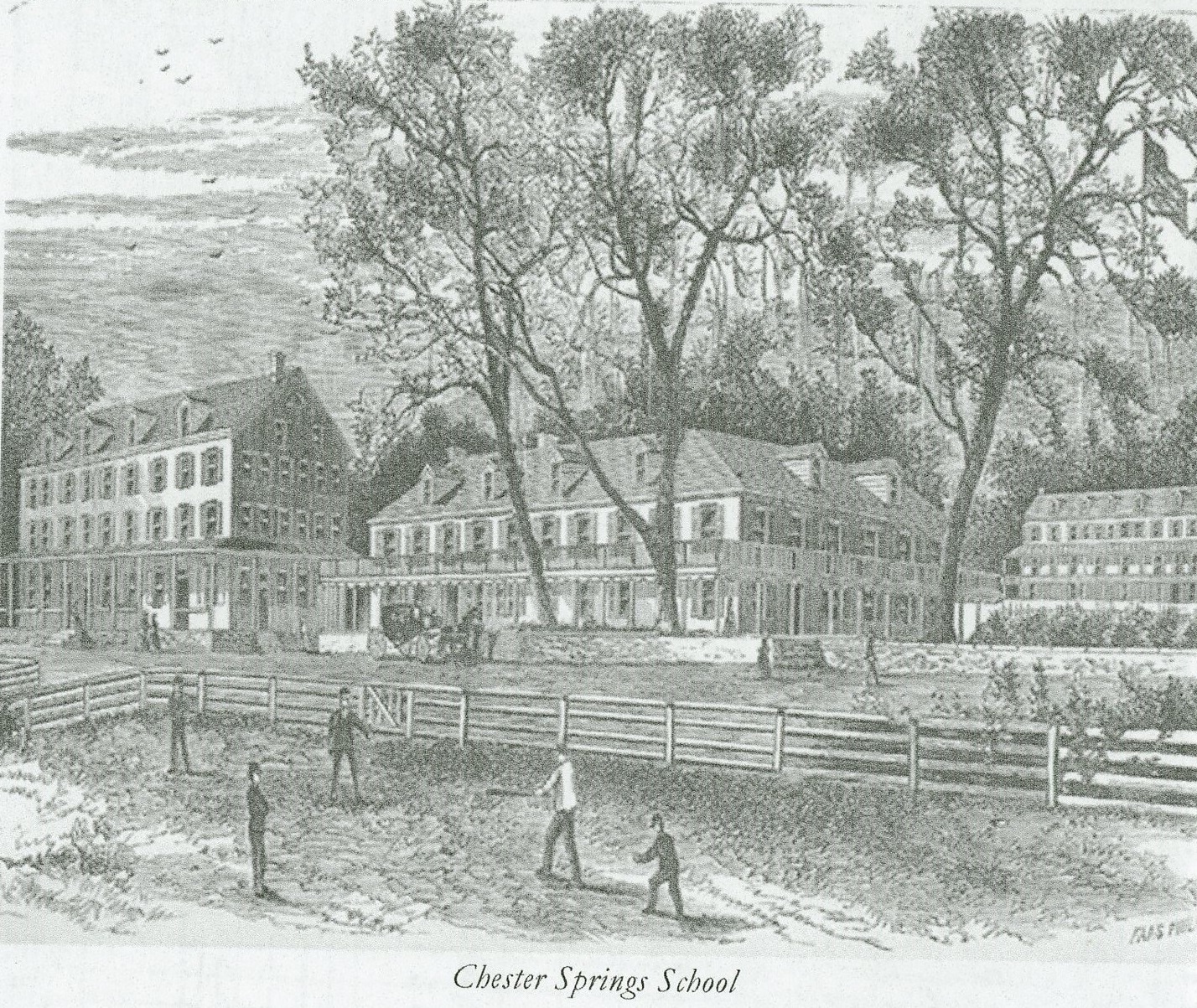
13 orphanages were initially set up3. The orphanages were located in rural areas, the nearest one to the Tredyffrin -Easttown area being at Chester Springs. The first superintendent was Dr. Thomas Burrowes.
The Superintendent then invited Mary McHenry to set up an orphanage for white Episcopalian boys, and the Lincoln Institution was born.
Does this sound as strange to you? Why would the Superintendent go out of his way to set up such a limited intake charitable orphanage and not make a similar offer to other religious groups?
Mary McHenry was not a meek woman who sat around waiting for events to happen. She made things happen.
We can postulate that it happened along these lines. Mary decided she wanted to set up an orphanage (she had previously helped children living on the streets of Philadelphia from her home), so she talked to her friends in the higher echelons of Philadelphia society, and to politicians and Episcopalian church leaders she knew. Then someone important whispered into the Superintendent’s ear that it would be a really good idea if he approached Mary with the offer to fund an orphanage if she would start one.
He did and everyone was happy.
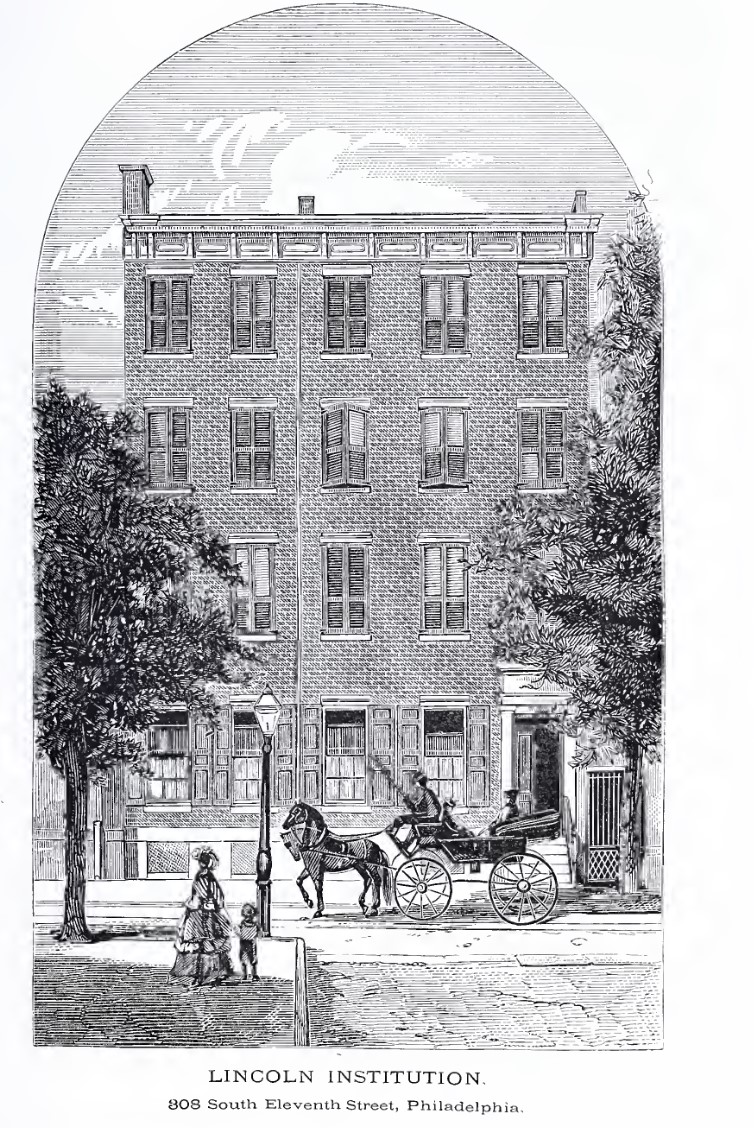
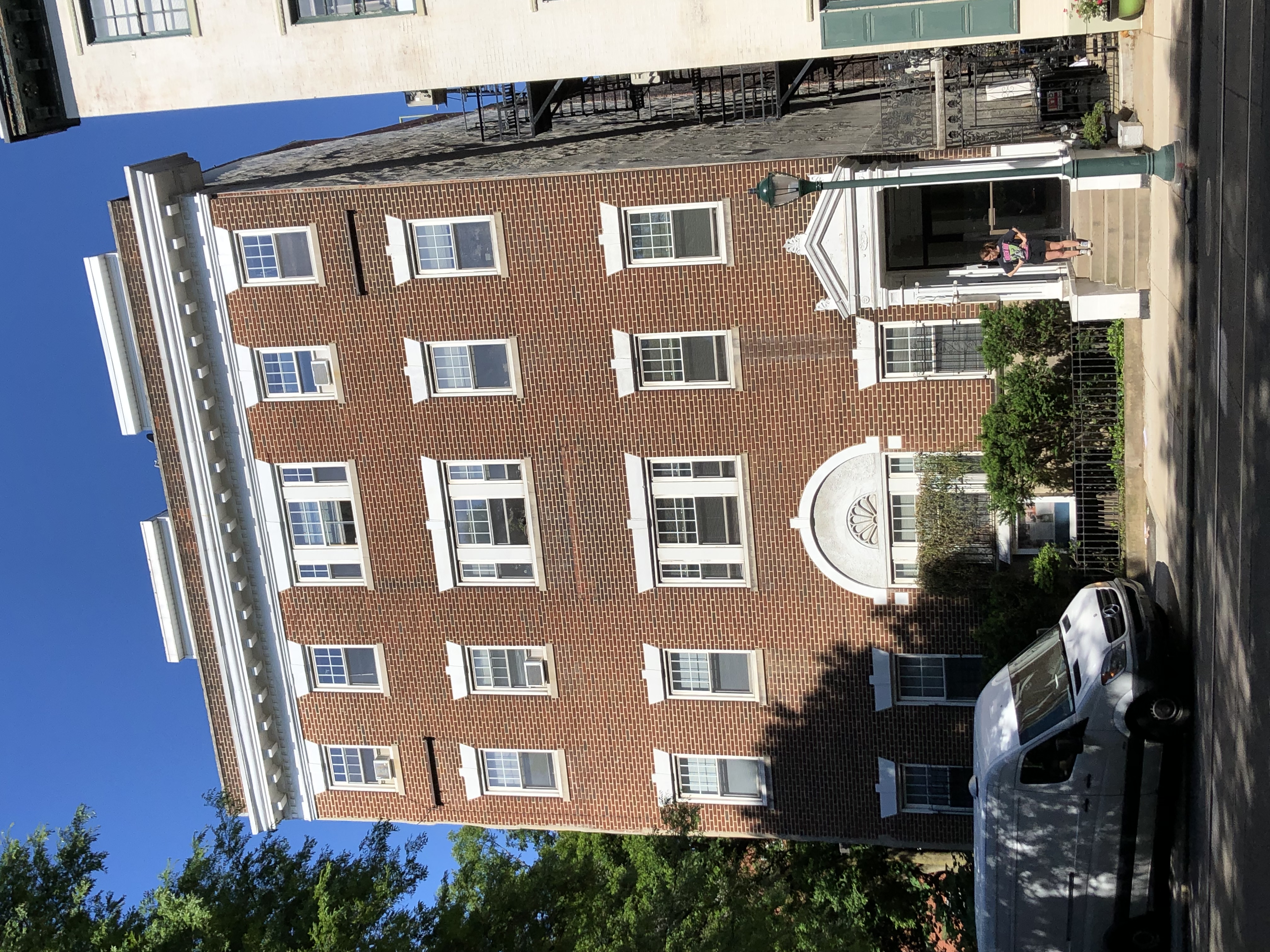
Mary agreed with the Superintendent to take in 100 orphan boys. The first steps were to set up a controlling charity and to obtain accommodation. The Lincoln Institution was born in 1866. Mary McHenry purchased a building on 11th Street in center city Philadelphia for the charity.
The first Government Indian school was organized in 1879 in Carlisle, Pennsylvania by Colonel Richard Henry Pratt, an army officer. Its goal was to destroy Indian culture, identities, languages, and traditions through assimilation and espoused the slogan ‘Kill the Indian, Save the Man’24. The students had their hair cut short and were given majority-culture apparel to wear. They were assigned Americanized names and the use of Indian names was banned. They were forced to use the English language, being punished if they used their native tongue. Indian rituals were banned, and the students forced to attend Christian services.
Bereft of government money, the Indian School reduced its size, to around a quarter of what it had previously been, so that it could survive financially on the available donations. Many of the Indians were moved to the Indian School in Carlisle42. The remaining pupils were mainly girls. As part of the contraction of the Indian School the Educational Home building and site were sold in 1903 leaving the 11th Street and Ponemah sites.
Very little information is available on this period in the Institution’s history as no annual reports have been found, though there are a few newspaper reports43. For example, it is unclear how students were recruited and how much they were allowed to follow their culture.
After Mary McHenry Cox’s death in 1906 the Institution reverted to its original scope - to be an orphanage for white, protestant boys. The Ponemah site continued to be used and some Indians continued to be accommodated as can be seen from the newspaper reports44, and the annual reports from the 1910s.
The annual reports of the Lincoln Institution for the period 1911 to 1919 include several photographs of the orphans, many appearing multiple times. The dates when these photographs were taken are unclear, but probably in the 1910s. Some of the photos were taken at the 11th Street building in Philadelphia45. The following photographs were taken at Ponemah and provide views of the site that are otherwise unavailable.
References and Notes
A list of published documents concerning Mary McHenry Cox can be found at documents.tehistory.org/LI.php?key1=Lincoln&key6=MMC
Cox-M’Henry marriage, Philadelphia Times, 4th June 1880. A transcription can be found at documents.tehistory.org/docs/doc733.html
Schools included were: Bridgewater School, Bucks County; Chester Springs, Dayton, Harford, Lincoln Institution, Loysville, Mansfield, McAllisterville, Mercer, Mount Joy, St. Paul’s, Butler County; Soldiers’ Orphan Institute, Uniontown, and White Hall. These schools were segregated. See https://babel.hathitrust.org/cgi/pt?id=mdp.39015069457474&seq=15&q1=bolden&view=1up for the Annual Report of the Superintendent of Soldiers’ Orphans for 1881, which includes lithographs of all the schools.
A history of the Orphans’ Schools is available as a book – The Civil War Soldiers’ Orphan Schools of Pennsylvania, 1864 – 1889 by Dr. O. David and Martha Gold, Pendragon, 2016.
A lithograph of Lincoln Institution can be found in many of the Superintendent of Soldiers Orphans’ Schools annual reports.
2024 Photograph by Mike Bertram.
A good example of the way issues were handled is the Meade Farm. This farm of 627 acres was in the Dakotas (now the South Dakota part) and was set up in 1880. Further reports were produced in 1881 and 1882 (see documents.tehistory.org/docs/doc872.html for details of the farm). After that entry the annual reports stopped mentioning the farm. The obituary to the farm is in the form of an entry in the 1886 accounts for the payment of back-taxes.
A list of the documents associated with the Lincoln Institution can be found at documents.tehistory.org/LI.php?key1=Lincoln
The Philadelphia maps can be found at the Greater Philadelphia GeoHistory Network, https://www.philageohistory.org/tiles/viewer/
A detailed description of the organization of the Lincoln Institution can be found at: documents.tehistory.org/docs/doc871.html
A description of the interior of the Educational Home can be found at: documents.tehistory.org/docs/doc873.html
Lithograph of the Educational Home from the 16th Annual Report of the Lincoln Institution, 1888. See https://archive.org/details/DKC0239
Lincoln Institution Annual Reports for 1867, page 10 and for 1868, page 8.
For example, donations for 1884 were:
One bottle Communion Wine, from Mrs. Evan Randolph; 12 bottles Jayne’s Expectorant, from Dr. D. Jayne & Son; lot of Toys, 1 large Foot Ball, 4 Turkeys, 8 doz. Oranges, 2 bottles Communion Wine, from Mrs. C. H. Clark; large lot of Corn. Cabbage, Beans and Peas, from Lincoln Institution; 1 bottle Communion Wine, from Mrs. A. H. Harrison; lot of Children’s Papers, from Mrs. J. Minis Hays; 1 barrel Apples, from Dr. J. C. Norris; 3 bushels Pea Nuts, 3 boxes Oranges, from Geo Boyd & Son; 1 bottle Communion Wine, from Miss Magee; 1 Iron Sill Strip for front door, from Mr. S. J. Cresswell; lot of Linen for Nursery and Fruit Baskets, from Mrs. Joshua Lippincott: 4 crates Cranberries, 6 Beef Tongues, from Mr. Boraef; 1 box Shellbarks, from Mrs. Ashbridge; 3 doz. Lemons, 6 Sick Wrappers, lot of Handsome Picture Books, 6 pairs Blankets, from Mrs. H. C. Gibson; lot of old Linen, from Mrs. John Pepper; large lot of Celery, from Christy & Rittenhouse; 1 barrel Flour, from L. Knowles & Co.; 1 Foot Ball, 10 New Suits Clothes, lot of New Books, 4 boxes Scrubbing Powder, from Mrs. Ashhurst; 2 suits Clothes, lot of Coats, from Hoyt & Co.; 100 Cocoanuts, from Mr. H. Benners; 2 gallons Whisky, from Mr. H. C. Gibson; 60 lbs. Mince Meat, from Atmore & Son; 6 balls Twine, from H. Mason; 200 labels for Toys, from Mr. John Spence; large lot of Cottage Cheese and Buttermilk, from a friend; donations of money for Easter Eggs, from Mrs. C H. Clark, Mrs. J. D. Lippincott, Mrs. F. A. Dick, Mrs. Gross Mrs. Gibson, Miss Brooks, Miss Israel, Mrs. Wm. Lippincott, Mrs. Richards, Mrs. Randolph; one year’s subscription to “The Sheltering Arms†of New York, “The Register of the Philadelphia Society for Organizing Charity,†and the “West Philadelphia Public Telephone,†from the Editors.
An analysis of the scholarships can be found at: documents.tehistory.org/docs/doc867.html
A list of employers’ businesses can be found at documents.tehistory.org/docs/doc877.html
Testimonials concerning some of the orphans from their employers can be found at: documents.tehistory.org/docs/doc874.html
The access to the employers Google map is at: https://www.the2nomads.site/LIemployers/LImap.html
A description of the Meade Farm can be found at documents.tehistory.org/docs/doc872.html
A list of the entertainments organized for the orphans for 1881 can be found at: documents.tehistory.org/docs/doc876.html
BOYS PADDLED AT THE LINCOLN HOME, Philadelphia Times, 8/18/1881 See documents.tehistory.org/docs/doc799.html
And The Orphans Plaints, Philadelphia Times 8/20/1881
See documents.tehistory.org/docs/doc792.html
THE LINCOLN HOME INVESTIGATION, Philadelphia Times 9/28/1881 See documents.tehistory.org/docs/doc794.html
Another Vindication, Philadelphia Inquirer 9/24/1881
See documents.tehistory.org/docs/doc796.html
REPORT OF THE COMMITTEE, Philadelphia Inquirer, 10/15/1881 See documents.tehistory.org/docs/doc800.html
Items from the Superintendent of the Soldiers Orphans' Schools, Reports 1881 to 1885. See documents.tehistory.org/docs/doc785.html
There are now many books on the Indian Schools in the United States (similar schools existed in Canada), for examples: A Final Promise – the campaign to Assimilate the Indians by Frederick E. Hoxie, University of Nebraska Press, 1984; Kill the Indian, Save the Man – the genocidal impact of American Indian Residential Schools by Ward Churchill, City Light Books, 2004; Education for Extinction – American Indians and the Boarding School Experience, 1875 – 1928 by David Wallace Adams, University Press of Kansas, 1995 and 2020.
The way the Native Americans were treated was greatly admired by the Nazi Party in the 1930s. A comparison between the United States situation and the Nazi plans can be found in The American West and the Nazi East – a comparative and interpretative perspective by Carroll P. Kakel III, Palgrave Macmillan, 2011.
See article in Red Man, https://carlisleindian.dickinson.edu/sites/default/files/docs-publications/RedMan_v11n07_1.pdf
In 2022 the Department of Interior published a review of the Indian Schools. It can be found at: https://www.bia.gov/sites/default/files/dup/inline-files/bsi_investigative_report_may_2022_508.pdf?itid=lk_inline_enhanced-template. [last accessed 04/03/2026]
The appendices are in a separate document at
https://www.bia.gov/sites/default/files/dup/inline-files/appendix_a_b_school_listing_profiles_508.pdf
See article from City & State newspaper at documents.tehistory.org/docs/doc909.html
Indians at School, an article in the Sonoma Democrat, 1884, can be found at: documents.tehistory.org/docs/doc854.html
See Indians at Spread Eagle from the Philadelphia Inquirer at documents.tehistory.org/docs/doc725.html, Indian Girl Pupils from the Philadelphia Times at documents.tehistory.org/docs/doc726.html, and Indian Girls at Eagle, also from the Philadelphia Times at documents.tehistory.org/docs/doc734.html
Geronimo’s group was split up on their surrender, the adults being imprisoned in Florida, while the children were sent to Indian schools.
An analysis of the Indian boys training can be found at documents.tehistory.org/docs/doc917.html
Mary McHenry Cox’s report on her visit to South Dakota can be found at documents.tehistory.org/docs/doc914.html
See A CONSIGNMENT OF SIOUX BRAVES AND PAPOOSES AT SCHOOL from the Philadelphia Times. 1884 at documents.tehistory.org/docs/doc798.html
An analysis of the lengths of stay for Indian boys at the Lincoln Institution can be found at : documents.tehistory.org/docs/doc879.html
The autobiography of ah-nen-la-de-ni (Daniel La France) can be found at: documents.tehistory.org/docs/doc729.html
Bob Goshorn was the President of the Tredyffrin Easttown Historical Society from 1978 to 1981. In 1978 he wrote an article on Ponemah which can be found at https://www.tehistory.org/hqda/html/v25/v25n1p020.html The article was republished in 2009 with additional photographs and can be found at https://www.tehistory.org/hqda/pdf/v46/v46n4p108.pdf. It was this article that inspired the research into the Lincoln Institution.
The Song of Hiawatha by Henry Wadsworth Longfellow
XXII. Hiawatha's Departure - finale
Thus departed Hiawatha,
Hiawatha the Beloved,
In the glory of the sunset,
In the purple mists of evening,
To the regions of the home-wind,
Of the Northwest-Wind, Keewaydin,
To the Islands of the Blessed,
To the Kingdom of Ponemah,
To the Land of the Hereafter!
See Richard Pratt letter to the Commissioner of Indian Affairs at documents.tehistory.org/docs/doc731.html
See a transcription of the George Jackson statement at documents.tehistory.org/docs/doc883.html
For a list of testimonials and newspaper articles on the complaint see documents.tehistory.org/docs/doc915.html
“We Have No Tribes” by Lena Lannutti, The Pennsylvania Magazine of History and Biography, vol. 1158, #1 (January 2024).
A transcription of the Indian Rights Association report on the Educational Home can be found at: documents.tehistory.org/docs/doc782.html
Pupils transferring to Carlisle: documents.tehistory.org/docs/doc763.html
A list of the newspaper reports on the Lincoln Institution Phase 3: documents.tehistory.org/LI.php?key1=Lincoln&key2=Phase3
A list of the newspaper articles during Phase 4 can be found at documents.tehistory.org/LI.php?key1=Lincoln&key2=Phase4
Photographs of the orphans at the Lincoln Institution 11th Street site can be found at: documents.tehistory.org/docs/doc788.html
The sale deed to Emily Exley includes a description of the change in charity names and mergers and can be found at: documents.tehistory.org/docs/doc766.html
Notes and References
Acknowledgements: Document courtesy of the University of Minnesota Libraries.